Metabolic Support Ingredients: What the Evidence Can Really Tell You
Metabolic-support ingredients should be judged by more than a plausible mechanism. This guide separates normal biological roles, human ingredient trials, formula matching and finished-product evidence.

Coffee-Routine Metabolic Support
Metabo Drops is a commercial supplement product. Research on coffee, caffeine or individual ingredients provides context, but it does not by itself establish that the finished formula produces a specific weight-management outcome.
BUY METABO DROPS
How to Evaluate a Metabolic-Support Ingredient
Many supplement claims begin with a true biological fact and then leap too far. A compound may participate in energy metabolism without meaning that taking more of it produces meaningful weight loss.
| Evidence layer | Question | What it can establish |
|---|---|---|
| Physiological role | Does the compound participate in a relevant biological pathway? | Plausibility only. |
| Ingredient trial | Does the ingredient change the target outcome in humans? | Effect of that ingredient at the tested dose and form. |
| Formula match | Does the commercial product contain a comparable dose and form? | Whether ingredient evidence is even reasonably transferable. |
| Finished-product trial | Was the complete formulation tested? | Direct product-level evidence for the tested outcome. |
Ingredients in the Current Metabo Drops Ingredient Set
The following cards explain why each ingredient appears in metabolic-support discussions while keeping mechanism, ingredient evidence and product proof separate.

Chlorogenic Acid
A major coffee polyphenol family discussed in research on glucose handling, oxidative pathways and weight-management mechanisms. The presence of a plausible mechanism does not establish a finished-product effect.

Camellia sinensis
Tea-derived preparations can contain catechins and caffeine and are frequently studied in relation to energy expenditure and fat oxidation. Effects depend on extract composition, dose and study context.
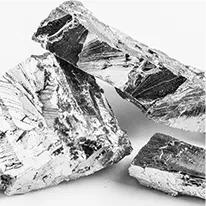
Chromium
An essential trace mineral involved in normal nutrient metabolism. Biological necessity does not mean extra supplementation reliably produces additional weight loss in people who are not deficient.

L-Carnitine
A compound involved in transporting long-chain fatty acids into mitochondria. This physiological role is real, but mechanistic relevance should not be converted automatically into a claim of meaningful fat loss.
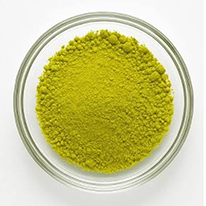
L-Theanine
An amino acid naturally found in tea and commonly paired with caffeine. Its main relevance is often the experience of stimulant use rather than a direct claim that it meaningfully increases calorie expenditure.

Vitamin Complex
Vitamins participate in normal energy-yielding metabolism. Correcting a deficiency can support normal physiology, but that is different from showing that extra vitamins increase metabolic rate or cause weight loss.
Chlorogenic Acids Are Relevant to Coffee Research, but They Are Not the Whole Story
The supplied coffee research identifies chlorogenic acids among the major bioactive compounds in coffee. They are studied in relation to glucose metabolism and other metabolic pathways, but coffee contains many compounds and the concentration changes with bean origin, roasting and brewing.
This makes three distinctions important: evidence on whole coffee is not automatically evidence on isolated chlorogenic acid; evidence on chlorogenic acid is not automatically evidence on a specific supplement dose; and ingredient evidence does not establish the effect of a complete commercial formula.
Camellia sinensis and Caffeine Need Dose-Specific Interpretation
Tea-derived ingredients can contribute caffeine and catechins, both of which are common subjects in metabolic-support research. Caffeine has the clearest supplied evidence for acute changes in metabolic rate, thermogenesis and fat oxidation.
That does not mean every tea extract produces the same effect. Extract composition, caffeine content, catechin profile and dose can vary widely. Product evaluation therefore requires exact formulation details rather than relying on the ingredient name alone.
L-Carnitine Shows Why Mechanism Is Not Enough
L-carnitine has a genuine physiological role in transporting long-chain fatty acids into mitochondria, where they can be oxidized for energy. That mechanism is often used in weight-management marketing.
The logical gap appears when the normal biological role is treated as proof that additional supplementation necessarily increases fat loss. To support that conclusion, human outcome evidence at a relevant dose and formulation would still be needed.
Chromium and Vitamins: Normal Metabolism Is Not the Same as Extra Weight Loss
Micronutrients are indispensable to normal physiology. Their importance is strongest when intake is inadequate or deficiency is present. That does not automatically mean higher supplemental intake creates a larger metabolic effect.
Chromium
Chromium is involved in normal macronutrient metabolism and is often marketed for glucose or weight-related goals. The existence of a biological role should not be used by itself as evidence of meaningful fat loss.
Vitamin complex
Many vitamins function as cofactors in energy-yielding pathways. Correcting deficiency can restore normal function, while taking more than needed is a different question requiring its own evidence.
L-Theanine Is Often Paired With Caffeine for a Different Reason
L-theanine is best known as a tea-derived amino acid frequently paired with caffeine in formulations aimed at modifying the subjective stimulant experience. That is different from claiming that L-theanine itself meaningfully increases thermogenesis or weight loss.
For this site, that distinction matters because an ingredient can be relevant to how a product feels without being the ingredient responsible for a metabolic claim.
Six Questions to Ask Before Trusting an Ingredient Claim
Extracts, salts and source materials can differ.
A study dose that is far higher than the product dose may not transfer.
Cell and animal studies can inform mechanism without proving human outcomes.
Metabolic rate, glucose, fat oxidation and body weight are different endpoints.
An acute response should not be described as long-term weight loss.
Ingredient evidence cannot substitute for finished-product evidence.
How to Apply This Framework to Metabo Drops
Metabo Drops combines several ingredients associated with metabolic-support marketing. The correct evaluation is to check the exact ingredient forms and amounts, compare them with relevant human evidence, consider safety and interactions, then ask whether the finished formulation itself has direct outcome evidence.
CHECK METABO DROPS OFFERMetabolic-Support Ingredients FAQ
What makes an ingredient “metabolic support”?
The term is usually used for ingredients linked to energy metabolism, thermogenesis, substrate use, glucose handling or nutrient processing. The marketing term itself does not establish clinical effectiveness.
Does an ingredient's biological role prove supplementation works?
No. Biological plausibility is only the first evidence layer. Human outcome evidence is still needed.
Can caffeine-related evidence prove a multi-ingredient formula works?
No. It can support a caffeine-specific claim under comparable conditions, but not the effect of an entire finished formula.
Are all green-tea or coffee extracts equivalent?
No. Extract composition, standardization, caffeine content and dose can differ substantially.
How should Metabo Drops ingredients be evaluated?
Match each exact ingredient form and amount to the relevant human evidence, then keep that separate from any claim about the finished product.
Evidence Boundaries Used on This Page
This page uses the supplied coffee and caffeine research for broad metabolic context. It does not claim that research on coffee, caffeine or individual nutrients establishes the efficacy of the Metabo Drops finished product.
Related Guides
Review Metabo Drops Before You Decide
If the product fits your goals, review the formula, package options and merchant terms while keeping the evidence distinctions on this page in mind.
VIEW METABO DROPS OFFER